



2026 Mazda Two-Row vs Three-Row SUV Comparison
Mazda CX-70 vs Mazda CX-90
Same Size. Different Seating Strategy. Which Fits You?
Five Seats With Cargo Ready to Go, or a Third Row When You Need It?
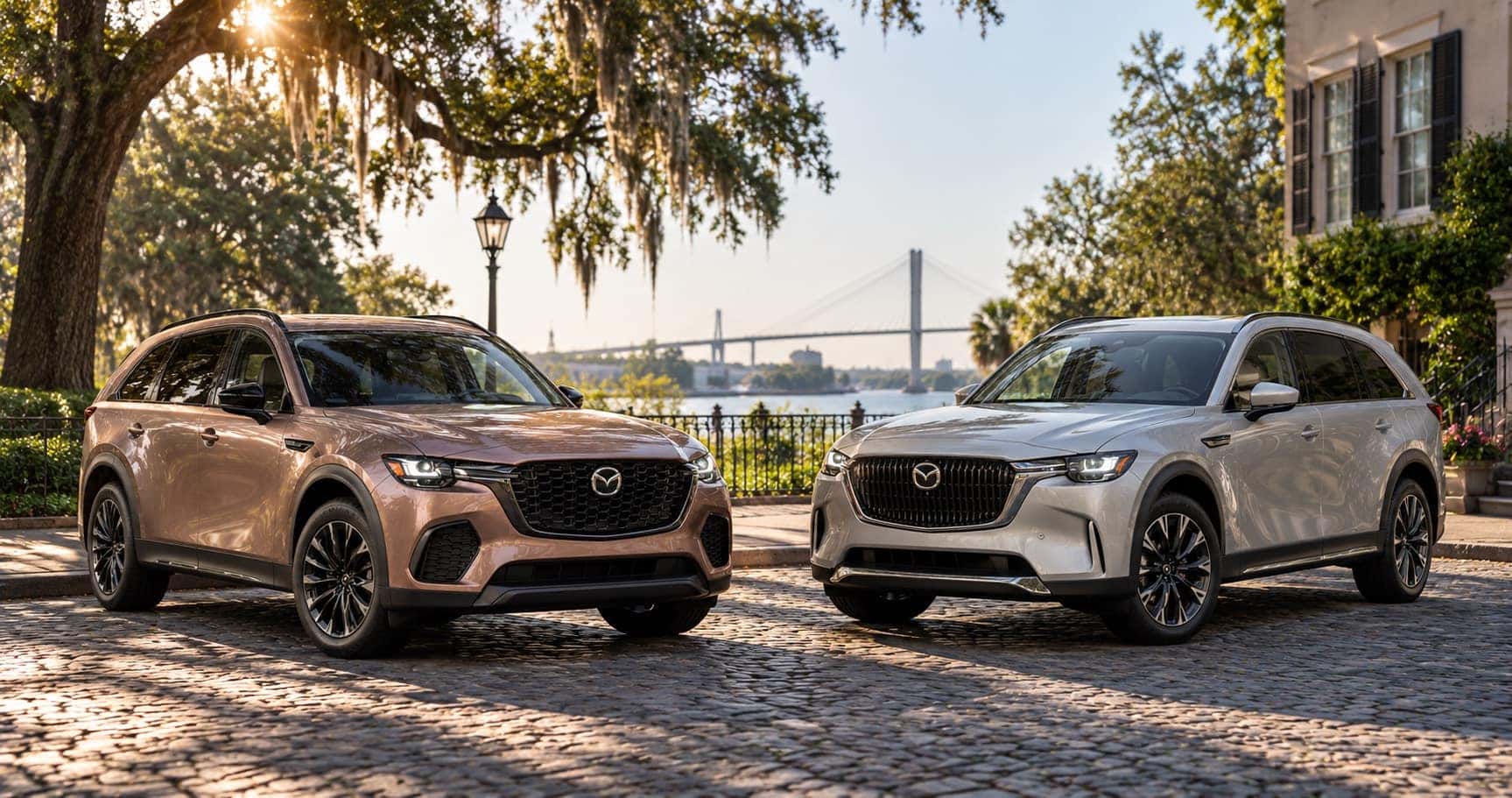
The 2026 Mazda CX-70 and CX-90 make sense on the same shortlist because they are far more alike than their names suggest. They share Mazda’s larger-SUV foundation, closely related styling, the same core powertrain families, standard all-wheel drive, and a similarly upscale cabin experience. The choice is not really about stepping from a smaller Mazda into a larger one.
The meaningful split happens behind the second row. The CX-70 stops at five seats and uses the rear of the shared footprint as a dedicated two-row cargo area with a larger underfloor storage compartment. The CX-90 uses essentially the same exterior dimensions to add a third row, with seating for up to eight depending on trim and configuration. Choosing the CX-70 is therefore not choosing a smaller SUV, and choosing the CX-90 does not automatically mean getting more cargo space.
For Savannah-area shoppers, the useful question is how often the passenger count actually moves beyond five. If it rarely does, the CX-70 keeps the rear layout simple for groceries, sports equipment, pets, beach gear, and road-trip luggage. If extra passengers are part of school pickups, family visits, or regular group travel, the CX-90 gives you seats the CX-70 cannot create. Once that question is settled, trim equipment, powertrain choice, and exact pricing can break a close tie.
Which Cabin Layout Fits Your Week?
Choose the situation that repeats most often. Because the CX-70 and CX-90 share so much underneath, passenger count and cargo routine are the fastest way to identify which one deserves the first drive.
Based on This Priority
Five Seats Cover the Week
Start With the Mazda CX-70
Who This Favors
Drivers who rarely need more than five seats and would rather make the rear of the SUV useful for luggage, sports gear, groceries, pets, or everyday cargo without managing an extra row.
Why It Points Here
The CX-70 uses the shared large-SUV footprint as a dedicated two-row package, keeping 39.6 cubic feet available behind the second row plus useful underfloor storage.
CX-70 vs CX-90 in 60 SecondsSix answers that clarify the two-row versus three-row decision
What is the biggest difference?
The CX-70 is a two-row SUV with five seats. The CX-90 adds a third row and offers seven- or eight-passenger configurations.
Is the CX-70 actually smaller?
Not by the usual definition. Both list a 122.8-inch wheelbase and a 200.8-inch body length before the front license-plate holder, so the decision is about how the cabin uses the footprint rather than stepping into a meaningfully larger SUV.
Which gives you more usable cargo room?
With the CX-90's third row folded, the two are nearly even: 39.6 cubic feet behind the CX-70's second row versus about 40 cubic feet behind the CX-90's second row. The CX-90 can match or slightly exceed the CX-70's main two-row cargo volume; the CX-70's distinction is the dedicated two-row layout and larger underfloor storage compartment.
Which starts at the lower MSRP?
The CX-90 starts lower at $39,300 before destination because it offers a 3.3 Turbo Select trim. The CX-70 starts at $42,750 with the 3.3 Turbo Preferred, a trim position the CX-90 lists at $43,450.
Do the powertrains meaningfully separate them?
Usually no. Both offer 280-horsepower and 340-horsepower turbo inline-six routes plus a 323-horsepower plug-in-hybrid system, an eight-speed automatic, and standard i-ACTIV AWD. The CX-70 PHEV does carry a modest EV-range edge at 30 EPA-estimated miles versus up to 26 miles for the CX-90 PHEV, but passenger and cargo needs remain the more important model-level divider.
What should decide the first test drive?
Start with passenger count. If five seats cover the routine, the CX-70 keeps the shared footprint focused on two-row utility. If a sixth, seventh, or eighth seat solves a recurring need, the CX-90 earns its extra row.
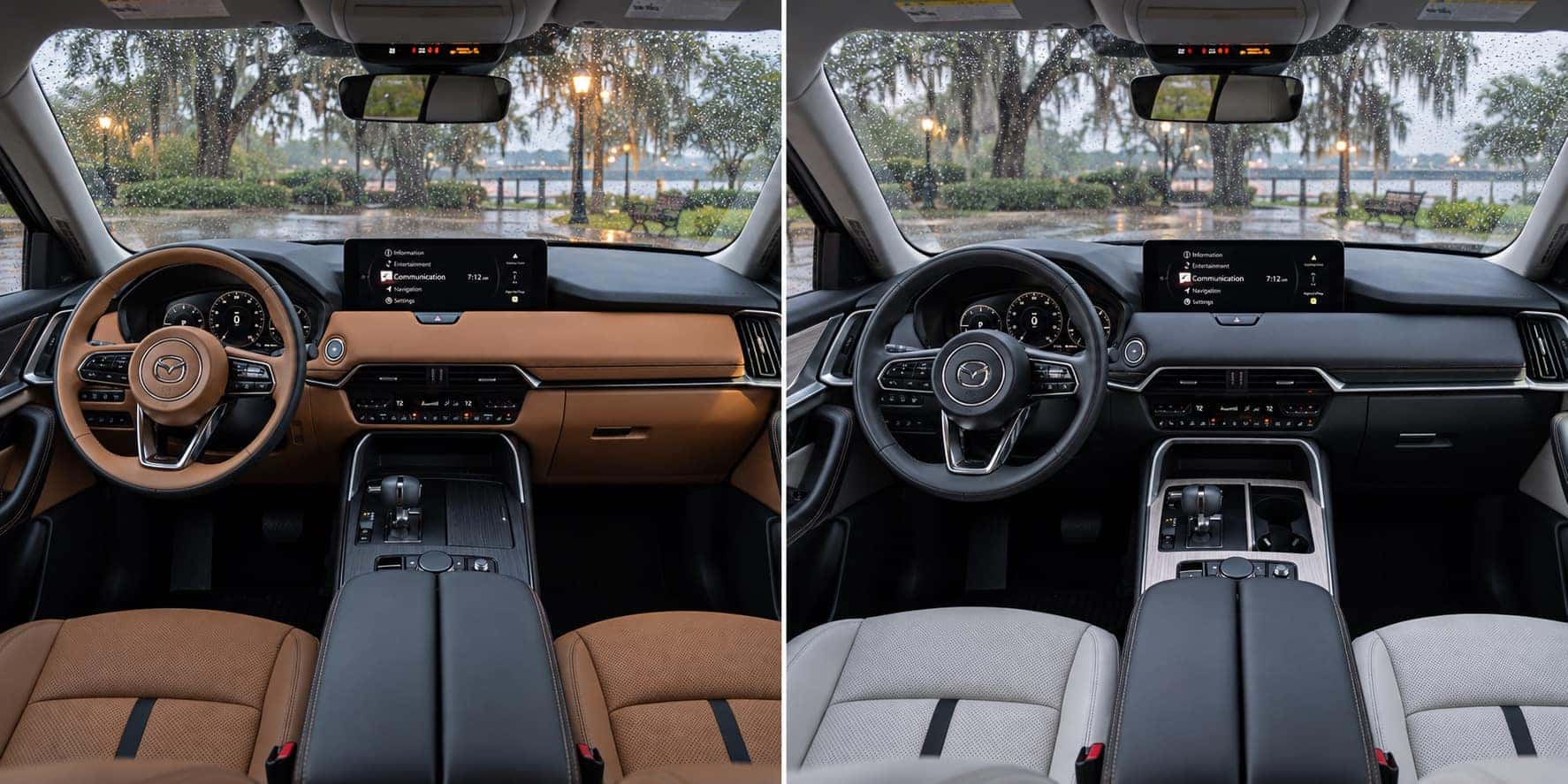
Where the CX-70 and CX-90 Actually Differ
Start with the seating layout, then look at how cargo behaves in the exact passenger mode you expect to use. Pricing matters too, but it needs trim context because the CX-90 has a lower Select entry point that the CX-70 skips. The shared engines, transmission, AWD system, and much of the cabin technology are intentionally kept in the background here because they do not do much to separate the two.
Third-Party Review Context
Car and Driver Rates Both Mazda Paths Closely
Car and Driver
2026 Mazda CX-70
Strong ratings across both powertrains, with praise centered on performance, handling, and an upscale cabin.
Car and Driver says the gas CX-70 delivers good power, nimble handling, and a handsome, class-above interior. Its PHEV review adds quick acceleration and nicely balanced road manners. Across both reviews, the publication also emphasizes how closely the CX-70 mirrors the CX-90, which supports treating the two-row layout—not a major mechanical difference—as the CX-70's defining role.
Car and Driver
2026 Mazda CX-90
The PHEV matches the CX-70's 8.5/10 rating, while the gas CX-90 remains only a half-point behind the gas CX-70.
Car and Driver praises the gas CX-90's premium-looking interior, fuel economy for its size, and nimble handling. The CX-90 PHEV earns 8.5/10 with praise for its upscale cabin, agile chassis, and combination of electric driving and strong acceleration. Its own five-seat shopping guidance still points readers toward the near-identical CX-70 when a third row is unnecessary.
Ready to Settle the Seating Question?
Compare the Same Passenger and Cargo Routine in Both
Bring the people and gear that make the decision real—child seats, strollers, sports equipment, coolers, luggage, or whatever usually fills the week. In the CX-70, check the dedicated two-row cargo floor and underfloor storage. In the CX-90, test third-row access and passenger fit, then fold row three and compare the resulting cargo area directly.
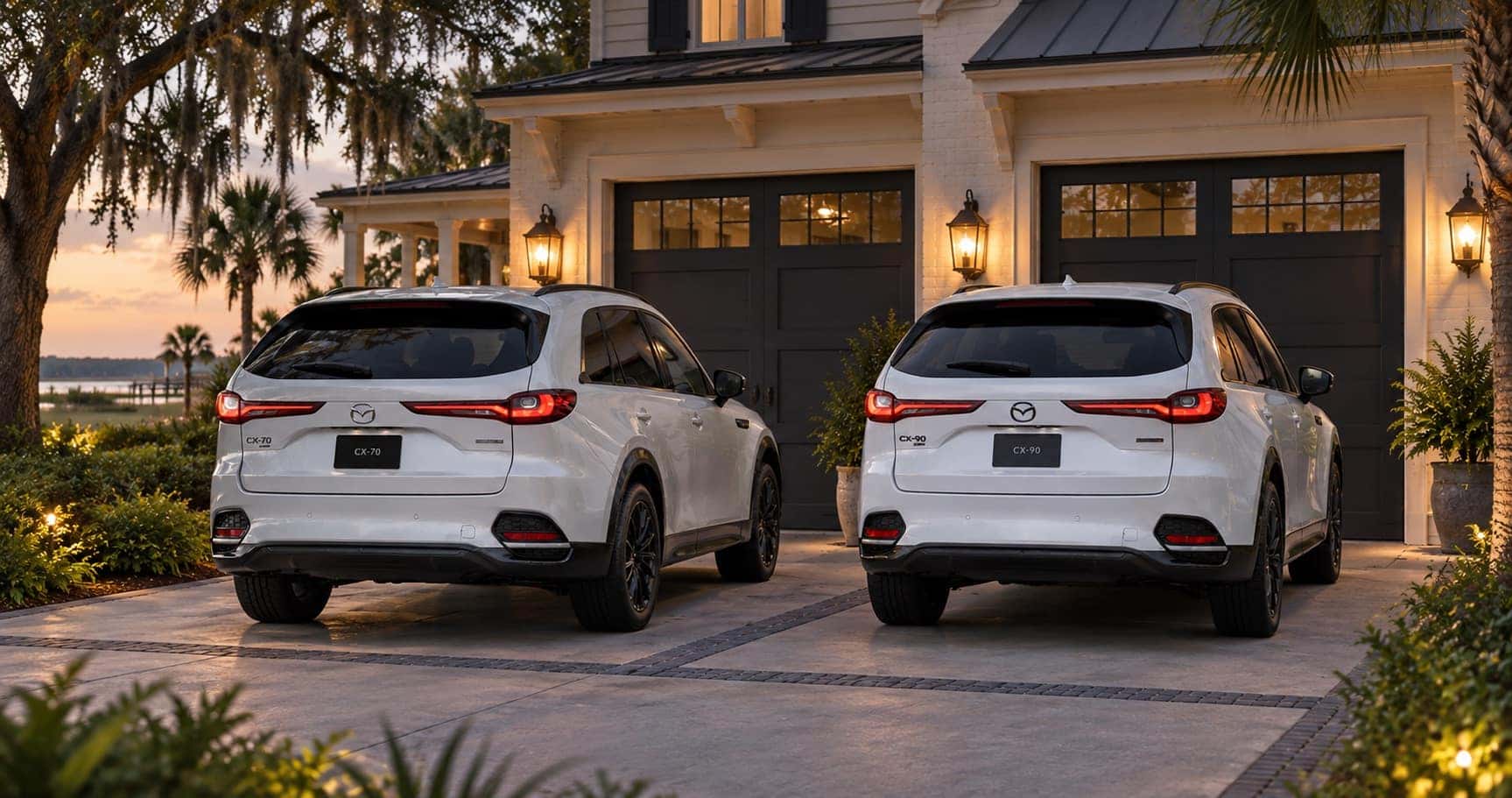
How the Larger-Mazda Choice Adds Up
Do You Need the Third Row — or a Dedicated Two-Row Layout?
The CX-70 is the cleaner fit when five seats cover the household and the rear of the SUV is more valuable as a dedicated cargo area than as a reserve passenger zone. Its advantage is not a dramatically larger cargo number—the CX-90 is nearly even with its third row folded. Instead, the CX-70 gives a five-seat household the simpler rear layout and larger underfloor storage area from the start.
The CX-90 earns its role when the extra row solves days that actually appear on the calendar. Around Savannah and Coastal Georgia, that could mean school pickups, visiting relatives, or shared trips up I-16 or along I-95 when a sixth or seventh passenger changes the plan. If your routine is more often five people plus beach gear for Tybee, sports equipment, pet supplies, or luggage for a weekend toward Brunswick and the Golden Isles, the CX-70's dedicated two-row package may feel more natural. Either way, the distinction is about packaging—not a major difference in the road space the vehicle occupies.
Still Split? Use Your Real Passenger and Cargo Routine to Break the Tie.
Mazda CX-70 vs Mazda CX-90 FAQs
Shopping & Ownership Support
Why J.C. Lewis Mazda Makes Shopping & Ownership Easier
The J.C. Lewis organization has served Savannah since 1912, and J.C. Lewis Mazda officially joined the group in 2020 after the acquisition of Fairway Lincoln Mazda. That local continuity gives shoppers one regional relationship for the purchase, trade, financing, service, parts, and the ownership questions that come later instead of treating each step as a separate handoff.
The dealership's Mazda Digital Showroom supports instant pricing and lets shoppers build more of the deal online, while financing, payment, and trade-value tools can establish more of the budget before a trip to Abercorn Street. For buyers coming from Pooler, Richmond Hill, Brunswick, or across the Lowcountry, that can leave the in-store visit focused on the parts that actually require being there: sitting in the exact vehicle, checking the seating configuration, loading the cargo area, and driving it.
After purchase, Mazda-trained technicians, Genuine Mazda Parts, Mazda Full Circle service support, online scheduling, and available Saturday service hours keep Mazda-specific care in the same relationship. J.C. Lewis Mazda also advertises a fleet of Mazda Courtesy Vehicles for service customers while their vehicles are in for routine maintenance, repairs, or warranty work, which can reduce the disruption of leaving a vehicle at the dealership.
Where to Go Next
Start Shopping or Keep Researching
Ready to Shop?
Work from current CX-70 and CX-90 inventory, financing, payments, and trade value around the exact configuration you would consider.
Research Next
Go deeper on the two lineups, electrified options, and towing before deciding which configuration to put on the road.
Disclaimers:
*MSRP excludes $1,645 destination and handling ($1,690 in Alaska), taxes, title, license, options, accessories, dealer-installed equipment, and dealer charges. Pricing and availability can change.
*CX-90 seating capacity varies by trim and second-row configuration; verify the exact seating layout before purchase.
*Cargo measurements vary by seating configuration, trim, equipment, and measurement condition. CX-90 ranges shown reflect published two-person and three-person third-row configurations.
*Both lineups offer configurations rated to tow up to 5,000 pounds when properly equipped; towing capacity varies by trim, powertrain, Towing Mode availability, hitch equipment, passenger/cargo load, and other factors. Confirm the exact vehicle's rating before towing.
*Power and electrified-driving figures vary by powertrain and fuel. Plug-in-hybrid electric range and efficiency depend on charging, temperature, driving conditions, vehicle condition, loading, climate use, and driving habits.
*Car and Driver ratings and review conclusions belong to the publisher and can change. Gas and PHEV versions are reviewed separately, and ratings are useful context rather than a guarantee of individual vehicle fit or ownership experience.