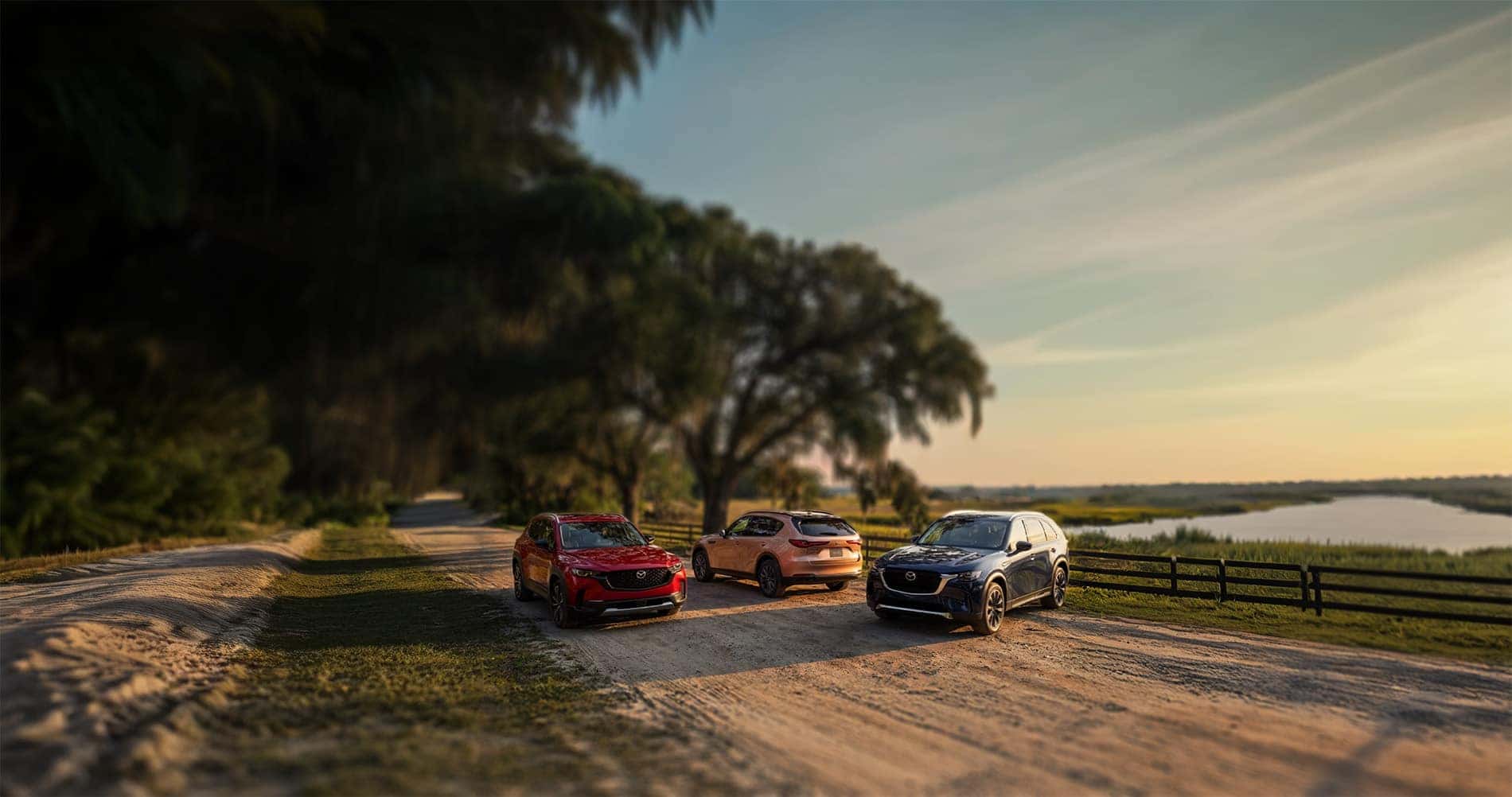
Choosing the right Mazda Hybrid SUV can feel overwhelming at first, especially if you’re just beginning to explore what Mazda offers in the hybrid and plug‑in hybrid space. This guide is designed to make that process easier by breaking down the CX‑50 Hybrid, CX‑70 PHEV, and CX‑90 PHEV in a way that’s simple to understand, even if you’re new to the world of electrified vehicles. Whether you’re comparing models for efficiency, space, or everyday practicality, this overview will help you see how each one fits into real life here in places like Savannah and the surrounding coastal communities.
Throughout this article, you’ll find clear, side‑by‑side tables that outline the details shoppers care about most. We’ll start with pricing and trim levels to give you a sense of where each hybrid Mazda SUV sits in the lineup. From there, we’ll explore powertrains, horsepower, fuel economy, and towing capacity — key factors for anyone considering a Mazda SUV hybrid or a Mazda plug in hybrid SUV for commuting or weekend travel. You’ll also get a full breakdown of exterior and interior dimensions, including seating layouts, cargo space, and comfort measurements across all rows. Finally, we’ll walk through the interior features and technology offerings that shape your daily driving experience.
By the end, you’ll have a clear, approachable understanding of Mazda’s hybrid SUVs and what sets each model apart, helping you feel confident as you move deeper into your research.
| Trim | CX-50 Hybrid* | CX-70 PHEV* | CX-90 PHEV* |
|---|---|---|---|
| Preferred | $33,970 | $49,945 | |
| Premium | $37,400 | $54,400 | |
| Premium Sport | $54,900 | ||
| Premium Plus | $40,050 | $57,450 | $57,950 |
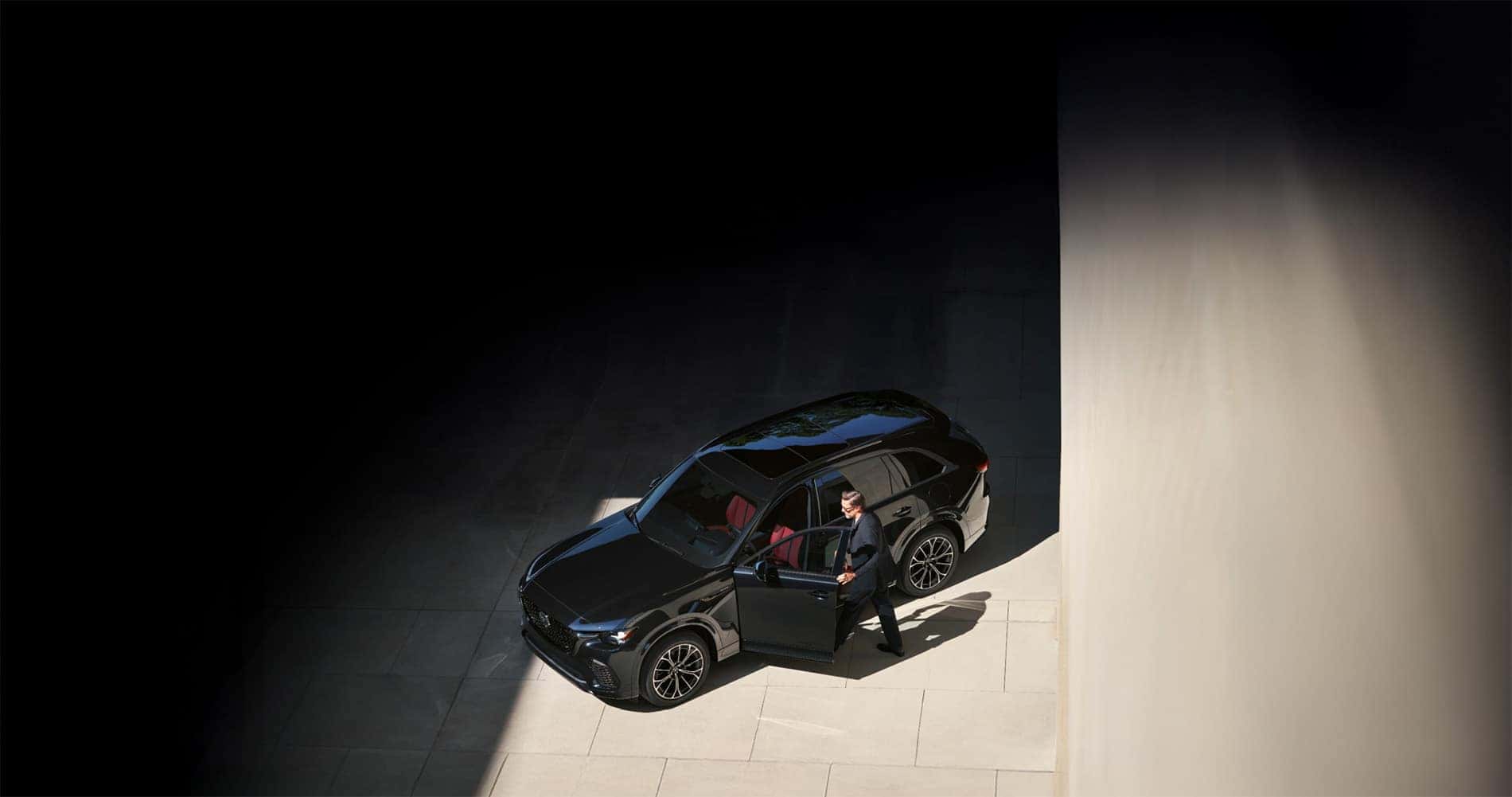
For anyone beginning to explore the Mazda Hybrid SUV lineup, this trim and pricing breakdown offers a helpful first look at how each model fits different needs and budgets.
The most accessible option is the CX‑50 Hybrid, which starts in the mid‑$30,000s. This makes it a strong entry point for drivers who want the fuel‑saving benefits of a hybrid Mazda SUV without stepping into a larger or more expensive vehicle. It’s a practical choice for everyday commuting around places like Savannah or Hardeeville, where efficiency and maneuverability matter just as much as comfort.
Moving up, the CX‑70 PHEV introduces plug‑in capability, giving you the option to drive on electric power for short trips while still having a gas engine for longer journeys. Its pricing reflects that added flexibility, landing in the mid‑$50,000 range. For many shoppers, this model represents a sweet spot — more space than the CX‑50, more electric driving than a standard hybrid, and still easier to manage than a full three‑row SUV.
At the top of the lineup sits the CX‑90 PHEV, Mazda’s largest and most powerful hybrid option. With three rows and the highest trim pricing, it’s designed for families who need room to grow or anyone regularly traveling with passengers. If you’re in a place like Hilton Head or Beaufort, where weekend trips and longer drives are part of the lifestyle, the CX‑90’s size and plug‑in hybrid capability can make daily life feel noticeably easier.
Overall, this range of Mazda hybrid SUVs gives shoppers clear pathways: efficient and affordable, spacious and electrified, or full‑size with maximum versatility.
| Category | CX-50 Hybrid | CX-70 PHEV | CX-90 PHEV |
|---|---|---|---|
| Powertrain | 2.5L I-4 Hybrid | 2.5L I-4 Plug-In Hybrid | |
| Transmission | Continuously-Variable | 8-Speed Automatic | |
| Drive | All-Wheel Drive | All-Wheel Drive | |
| Total System Output | 219 Horsepower / 163 lb-ft Torque | 323 Horsepower / 369 lb-ft Torque | |
| Battery Capacity | 1.59 kWh NiMH | 17.8 kWh Li-Ion | |
| Fuel Economy (Gas/Hybrid)* | 39 City / 37 Highway MPG | 24 City / 27 Highway MPG | |
| MPGe (Gas/PHEV)* | — | 53 City / 61 Highway MPG | |
| Electric Range* | — | 26 miles | |
| Towing Capacity* | 1,500 lbs | 3,500 lbs | |
When you look at the powertrain differences across Mazda’s hybrid SUVs, the first thing that stands out is how each model is built for a different kind of driver. The CX‑50 Hybrid uses a traditional hybrid system, which means it automatically blends gas and electric power to boost fuel efficiency without needing to be plugged in. That’s why it delivers up to 39 MPG in the city — a major advantage for anyone who spends a lot of time in stop‑and‑go traffic around places like Savannah or Bluffton.
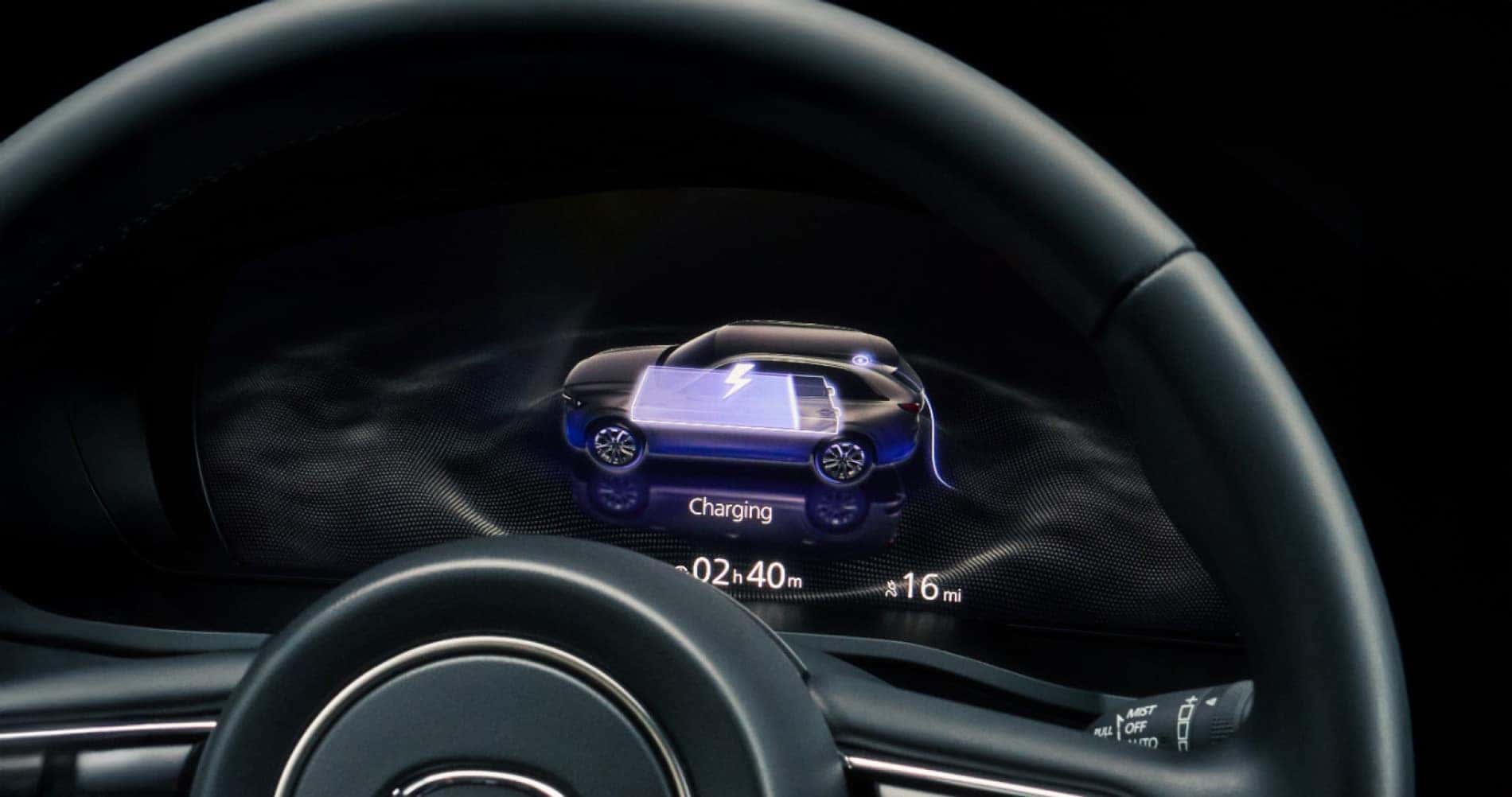
The CX‑70 PHEV and CX‑90 PHEV, on the other hand, are plug‑in hybrid SUVs. They offer much more power — 323 horsepower — and can drive short distances on electricity alone. With an estimated 26 miles of electric range, many daily errands or commutes can be done without using gas at all. This makes them appealing for drivers who want the flexibility of electric driving without committing to a fully electric vehicle. It’s a practical middle ground for families in areas like Hilton Head, where short local trips are common but longer weekend drives still matter.
Towing capacity is another key difference. The CX‑50 Hybrid is ideal for light-duty needs, while the CX‑70 and CX‑90 PHEV models can tow up to 3,500 pounds, giving you enough strength for small trailers, bikes, or beach gear.
Overall, Mazda’s hybrid SUVs offer three distinct experiences: maximum efficiency, electric‑ready versatility, or full family capability — making it easier for shoppers to choose the hybrid Mazda SUV that fits their lifestyle.
| Category | CX-50 Hybrid | CX-70 PHEV | CX-90 PHEV |
|---|---|---|---|
| Length | 186.1 in | 200.8 in | 200.8 in |
| Overall Width | 80.8 in | 84.9 in | 84.9 in |
| Body Width | 75.6 in | 77.6 in | 78.5 in |
| Height | 65.6 in | 68.7 in | 68.7 in |
| Wheelbase | 110.8 in | 122.8 in | 122.8 in |
| Ground Clearance | 7.6 in | 8.1 in | 8.0 in |
| Front Track | 65.3 in | 67.1 in | 67.1 in |
| Rear Track | 65.4 in | 67.2 in | 67.3 in |
When you compare the exterior dimensions of Mazda’s three hybrid SUVs, you start to see how each one is designed with a different type of driver in mind. The CX‑50 Hybrid is the most compact of the group, making it a great fit for shoppers who want the efficiency of a Mazda Hybrid SUV without the bulk of a larger vehicle. Its shorter length and narrower body make parking and maneuvering easier, especially in tighter areas around Savannah or Beaufort, where space can be limited in historic districts or busy shopping areas.
The CX‑70 PHEV and CX‑90 PHEV share a noticeably larger footprint. Both stretch over 200 inches long and offer wider stances, giving them a more substantial road presence. This added size translates into more interior room, a smoother ride, and greater stability at highway speeds. For families or drivers who regularly take longer trips, the extra wheelbase—over a foot longer than the CX‑50—can make daily driving feel more relaxed and confident.
Ground clearance is another practical detail. The CX‑70 and CX‑90 sit slightly higher than the CX‑50, which can be helpful for uneven roads, beach access points, or rural routes common around Hilton Head. Even if you’re not planning to go off‑road, that extra height can make getting in and out of the vehicle more comfortable.
Overall, these dimensions highlight the natural progression within Mazda’s hybrid SUV lineup: the CX‑50 Hybrid for agility and efficiency, the CX‑70 PHEV for added space and versatility, and the CX‑90 PHEV for maximum presence and family‑friendly capability.
| Category | CX-50 Hybrid | CX-70 PHEV | CX-90 PHEV |
|---|---|---|---|
| Rows of Seating | 2 | 2 | 3 |
| Passenger Capacity | 5 | 5 | 7 |
| Headroom (Row 1/2/3) |
39.1 in 37.8 in — |
39.1 in 38.3 in — |
39.7 in 39.3 in 36.9 in |
| Legroom (Row 1/2/3) |
41.7 in 39.8 in — |
41.7 in 39.4 in — |
41.7 in 39.4 in 30.4 in |
| Shoulder Room (Row 1/2/3) |
55.9 in 53.6 in — |
60.7 in 58.1 in — |
59.3 in 58.0 in 53.9 in |
| Hip Room (Row 1/2/3) |
53.6 in 52.1 in — |
56.0 in 54.0 in — |
58.0 in 57.4 in 43.7 in |
| Cargo Space (Rows 1/2/3) |
56.3 cu ft 31.4 cu ft — |
75.3 cu ft 39.6 cu ft — |
75.2 cu ft 40.1 cu ft 14.9 cu ft |
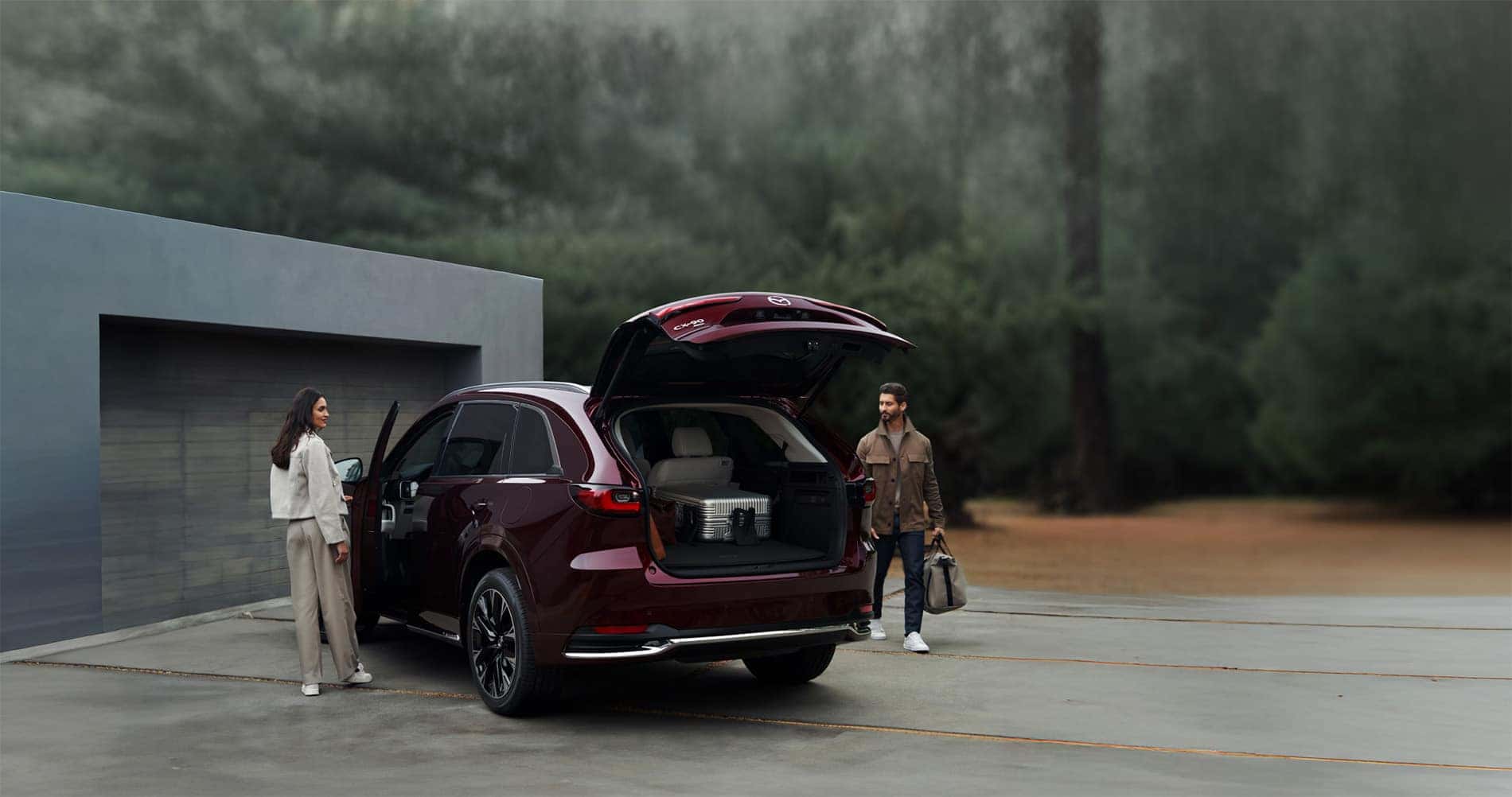
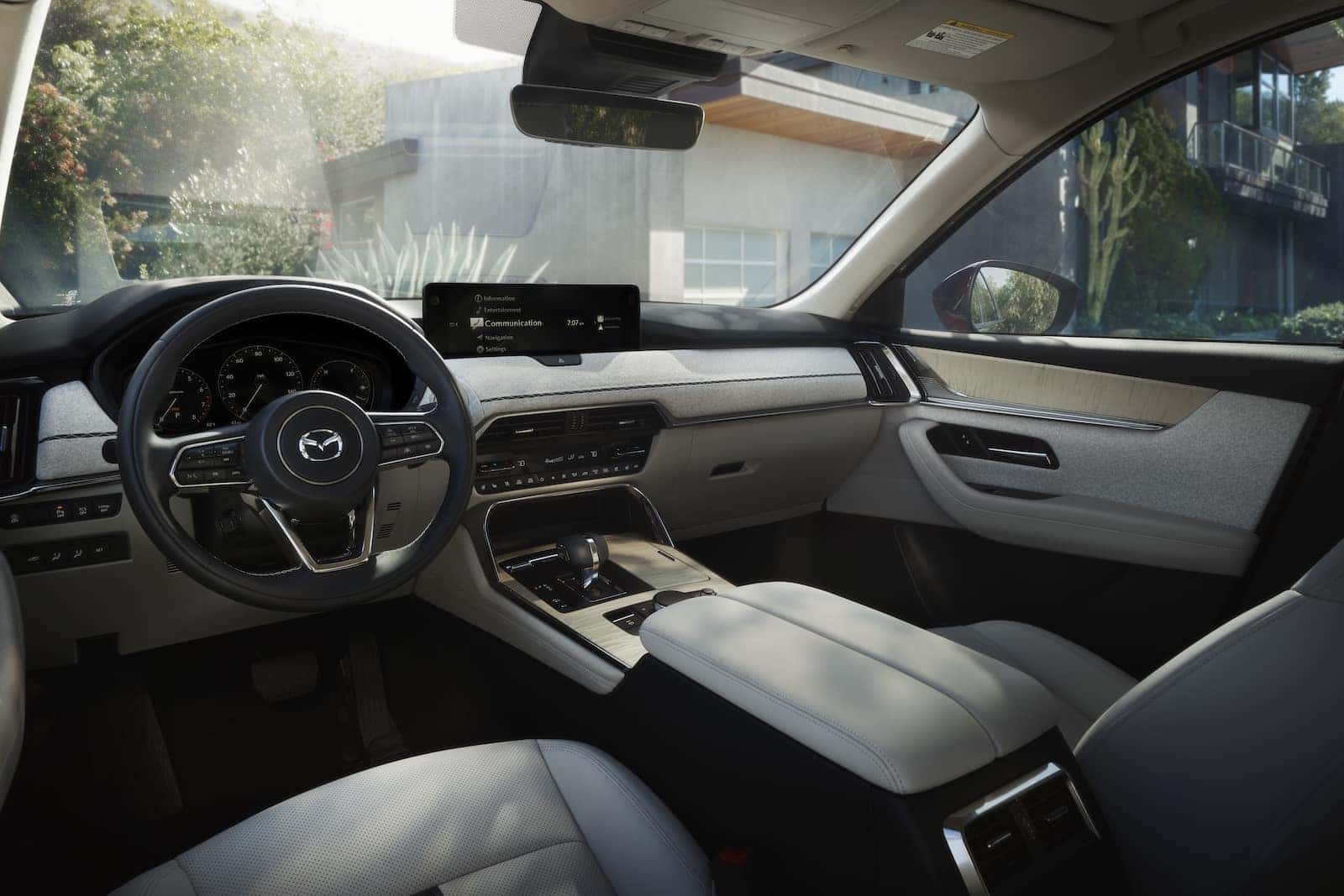
Understanding the interior space of each Mazda Hybrid SUV can make it much easier to picture how these vehicles fit into everyday life. Even if you’re just starting your research, the differences between the CX‑50 Hybrid, CX‑70 PHEV, and CX‑90 PHEV become clear once you look at how each model is laid out inside.
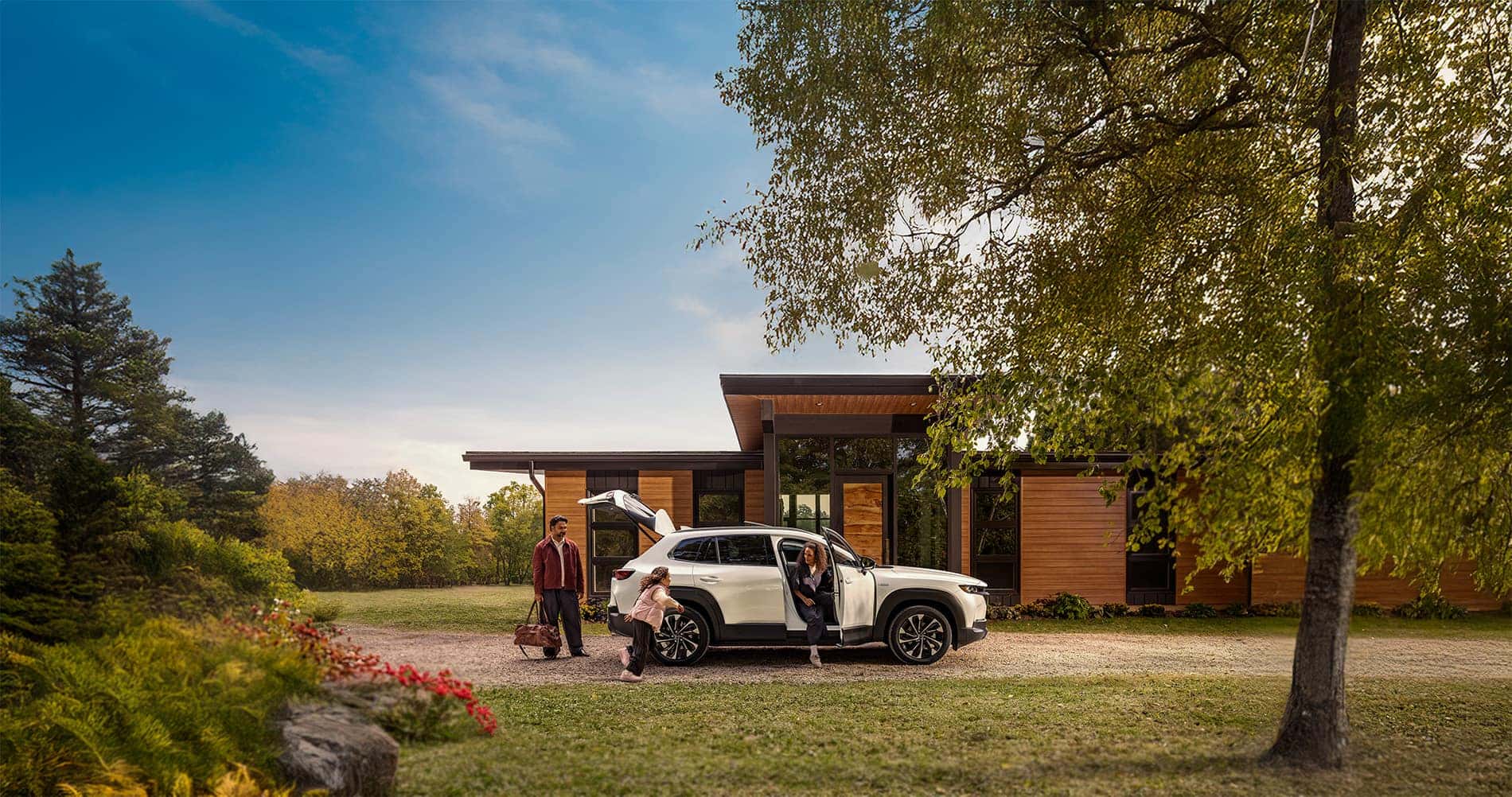
The CX‑50 Hybrid is the most compact option, offering two rows and seating for five. Its front‑row legroom is generous, and the second row still provides enough space for adults or growing kids. This makes it a comfortable choice for daily commuting or weekend drives around places like Bluffton or Savannah, where maneuverability and efficiency matter more than maximum cabin size. Cargo space is also practical, giving you room for groceries, sports gear, or luggage without stepping into a larger vehicle.
The CX‑70 PHEV builds on that formula with noticeably more interior volume. While it also seats five, its wider cabin and larger cargo area make it feel more open and accommodating. If you’re comparing Mazda hybrid SUVs and want something that balances plug‑in capability with extra room for passengers, this model hits a sweet spot. It’s ideal for drivers who want a hybrid Mazda SUV that feels more spacious without committing to a third row.
At the top of the lineup, the CX‑90 PHEV adds a full third row, expanding seating to seven. This makes it the most family‑friendly option, especially for those in Hilton Head who need space for car seats, friends, or extended family. The third row is best for kids or shorter trips, but the overall cargo flexibility is a major advantage for active households.
Together, these models show how Mazda designed its hybrid SUV lineup to meet different lifestyles—compact and efficient, roomy and refined, or fully family‑ready.
As you reach the end of this guide, the bigger picture of Mazda’s electrified lineup becomes much clearer. Each model—the CX‑50 Hybrid, CX‑70 PHEV, and CX‑90 PHEV—offers its own blend of efficiency, space, and everyday practicality, giving shoppers three distinct paths into the world of Mazda hybrid SUVs. Whether you’re drawn to the nimble size of the CX‑50, the balanced versatility of the CX‑70, or the family‑ready capability of the CX‑90, the goal of this article has been to give you the clarity you need to move forward with confidence.
By breaking down pricing, performance, dimensions, and interior comfort, you’ve seen how these vehicles differ not just on paper, but in real‑world use. A Mazda Hybrid SUV isn’t just about fuel savings—it’s about choosing a vehicle that fits your routines, your passengers, and the way you move through places like Savannah, Bluffton, or Hilton Head. And if you’re considering a hybrid Mazda SUV or even a Mazda plug in hybrid SUV, understanding these details early on helps you narrow your options quickly.
As you continue your research or take the next step toward a test drive, you now have a solid foundation for comparing Mazda hybrid SUVs with confidence.
If you’re ready to take the next step toward a Mazda Hybrid SUV, the team at J.C. Lewis Mazda is here to make the process simple, transparent, and genuinely enjoyable. Now that you’ve seen how the CX‑50 Hybrid, CX‑70 PHEV, and CX‑90 PHEV compare in size, performance, efficiency, and everyday practicality, experiencing them in person is the best way to discover which one truly fits your lifestyle. Whether you need the agility of a compact hybrid, the electric flexibility of a plug‑in model, or the family‑ready space of a three‑row SUV, our specialists can walk you through each option and help you find the right match.
Drivers from Savannah, Bluffton, Hilton Head, and the surrounding coastal communities rely on us for a reason — we know the Mazda lineup inside and out, and we’re committed to helping you choose a hybrid Mazda SUV with confidence. From test drives to trade‑ins to exploring incentives for Mazda plug in hybrid SUV models, we’re here to support you at every step.
DISCLAIMERS:
*MSRP does not include $1,375 destination and handling fee (Alaska $1,420), taxes, title or additional fees. Actual dealer price will vary.
*EPA-estimated mileage. Actual results will vary based on driving conditions, vehicle maintenance, driving habits, and other factors.
*Towing capacity shown is maximum when properly equipped. Towing may vary based on cargo, passenger count, accessories, and vehicle configuration.